Lion's mane grows in two parts: the fruiting body you'd recognize as a mushroom, and the mycelium, a root-like network that spreads through whatever it's grown on. Both are part of the whole organism. The real quality issue isn't which part is in the bottle — it's whether a product is the whole mushroom, or whether it's been bulked out with the grain substrate the mycelium was grown on and then sold as if the whole thing were mushroom. That substrate can make up most of the finished weight, which means you're paying for starch, not fungus.
Beta-glucans are one practical way to check. They're compounds found in the mushroom's cell walls, and a product diluted with grain substrate will typically test lower for them, simply because there's less actual mushroom per gram. A high quality lion's mane supplement will state its beta-glucan percentage and back it with third-party lab testing, not just a claim on the label. That kind of transparency is what actually separates a best lion's mane mushroom supplement from one riding on the name alone.
If a brand can't tell you what's actually in the powder, or won't share test results, that tells you something too. We've laid out a broader framework for How to Judge the Quality of Your Supplement that applies well beyond just lion's mane, if you want to take that same scrutiny to anything else you buy.
Lion's Mane Extract Supplement vs. Whole Powder: What's The Difference
An extract and a whole powder start from the same mushroom, but they end up as very different products. Extraction pulls out specific compounds and concentrates them, while whole powder keeps the mushroom as it is, ground down but otherwise unchanged. Here's how the two compare:
How Extraction Works
Extraction usually means soaking the mushroom in hot water, alcohol, or both, then drying what's left behind. This concentrates certain compounds, like beta-glucans, into a smaller, more potent powder.
What Extraction Leaves Out
Concentrating some compounds means losing others. Fiber, certain proteins, and the broader nutrient profile of the whole mushroom often get left behind in the process, since extraction targets specific molecules rather than preserving the whole.
Why We Sell Whole Powder, Not an Extract
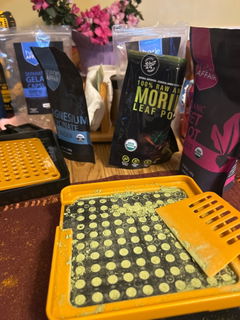
Our Lion's Mane Powder is made from the whole mushroom — fruiting body and mycelium together, grown on organic oats — not an extract. We don't call it something it isn't. It's a full-spectrum, whole-food powder, and we think you should know exactly which one you're buying.
How to Actually Read Lion's Mane Supplement Reviews
A five-star average tells you almost nothing about what's in the capsule. Reviews are shaped by expectation, placebo, and how quickly someone expected to notice something, not by lab testing. Before you trust a stack of glowing reviews, here's what to actually look for:
What Reviews Can Tell You
Reviews are useful for catching real problems: capsules that arrive broken, orders that never ship, customer service that goes silent. That kind of feedback reflects the company, not the mushroom.
What Reviews Can't Tell You
No review can confirm beta-glucan content, extraction method, or whether the powder is mostly mushroom or bulked out with growing substrate. A reviewer who reports feeling something and credits the product may be responding to expectation as much as to what's actually in the capsule. If you're curious how lion's mane compares to other functional mushrooms people ask about, our guide to 6 Amazing Functional Mushrooms to Boost Your Health is a good next stop.
The Red Flag Worth Monitoring
Be cautious of reviews that promise fast, dramatic results. Functional mushrooms like lion's mane are things most people take consistently over weeks, not something that works like a switch. Keep that in mind any time you're reading lion's mane supplement reviews that sound too good to be true.
Why the Choice Is Ultimately Yours
Finding the best lion's mane mushroom supplement for you comes down to a few concrete checks: what's actually in the powder, whether it's an extract or a whole food powder, and how much weight you put on reviews versus real testing. None of that requires special training. It just requires knowing what questions to ask before you buy.
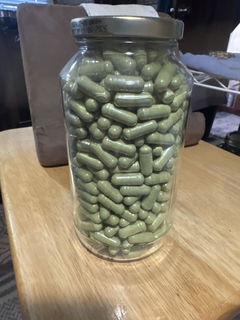
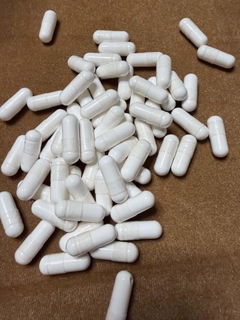
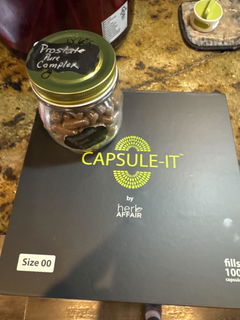
If you'd rather skip the guesswork entirely, our organic Lion's Mane Powder gives you the whole mushroom — fruiting body and mycelium — in its raw form, and our capsule fillers let you dose it exactly the way you want. Some people prefer that level of control. Others are fine buying finished, as long as the label holds up to scrutiny. Either way, you're the one who has to live with what you're taking, so you're the one who should decide what's in it.
Disclaimer: These statements have not been evaluated by the Food and Drug Administration. This product is not intended to diagnose, treat, cure, or prevent any disease.
Sources:
- Friedman, M. (2015). Chemistry, nutrition, and health-promoting properties of Hericium erinaceus (Lion's mane) mushroom fruiting bodies and mycelia and their bioactive compounds. Journal of Agricultural and Food Chemistry, 63(32), 7108–7123. https://doi.org/10.1021/acs.jafc.5b02914
- Mori, K., Inatomi, S., Ouchi, K., Azumi, Y., & Tuchida, T. (2009). Improving effects of the mushroom Yamabushitake (Hericium erinaceus) on mild cognitive impairment: A double-blind placebo-controlled clinical trial. Phytotherapy Research, 23(3), 367–372. https://doi.org/10.1002/ptr.2634
- Glisan, S. L., Schwartz, S. J., & Ferruzzi, M. G. (2021). Mushroom extracts: Extraction methods and composition of bioactive compounds. Food Reviews International, 37(2), 140–165. https://doi.org/10.1080/87559129.2019.1613381
- Docherty, S., Doughty, F. L., & Smith, E. F. (2023). The acute and chronic effects of Lion's mane mushroom supplementation on cognitive function, stress and mood in young adults: A double-blind, parallel groups, pilot study. Nutrients, 15(22), Article 4842. https://doi.org/10.3390/nu15224842
- See Toh, C. J. Y., Bi, X., Lee, H. W., Yeo, M. T. Y., & Henry, C. J. (2023). Is mushroom polysaccharide extract a better fat replacer than dried mushroom powder for food applications? Frontiers in Nutrition, 10, Article 1111955. https://doi.org/10.3389/fnut.2023.1111955