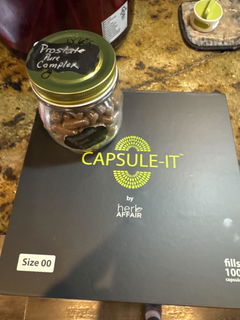
Read the label on most lion's mane capsules and you will see the word "extract." That means the mushroom has been processed to concentrate certain compounds, usually beta-glucans, before it ever reaches the capsule. An extract is not the same thing as the whole mushroom. It is a piece of it, isolated and strengthened in one direction.
We think that distinction matters. A whole lion's mane powder carries the full range of what the mushroom naturally contains — fruiting body and mycelium alike. An extract narrows that down. Neither is better by default. They are just different, and you deserve to know which one you are buying.
Most lion's mane capsules also hide their fillers behind vague ingredient lists. When you fill your own, the capsule holds one thing: the powder you chose, at the dose you set.
Why People Take Lion's Mane: Capsule Benefits And The Research Behind Them
Lion's mane has been studied for decades, mostly for its effect on nerve tissue. Researchers have identified specific compounds in the mushroom that interact with how nerve cells grow and repair. If you want to see how lion's mane compares to other fungi we carry, our guide to 6 Amazing Functional Mushrooms to Boost Your Health breaks down the differences. Understanding the mechanism here helps explain what people mean when they talk about lion's mane capsule benefits:
The Nerve Growth Factor Connection
Lion's mane contains compounds called hericenones and erinacines. Lab studies suggest these compounds may help stimulate nerve growth factor, a protein your body uses to maintain nerve cells. That is the mechanism behind most of the interest in this mushroom.
What The Research Measured
Because nerve tissue rebuilds slowly, the research on lion's mane measured its effects over weeks of consistent use, not hours. This isn't a compound that works like a stimulant, and we'd rather tell you that upfront than let you expect an immediate effect.
Beta-Glucans And The Whole Mushroom
Whole Lions Mane powder also carries beta-glucans, a type of fiber studied for its role in supporting a healthy immune response. Extracts concentrate certain compounds, but the whole mushroom brings the fuller nutritional picture along with it.
Filling Your Own Lion's Mane Mushroom Capsules At Home
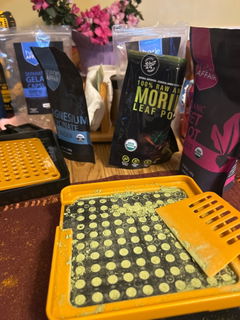
Store-bought capsules leave the process out of sight. When you fill your own, you see every step, and you decide the dose. Here is how it works if you want to build organic lion's mane capsules with our system:
Choosing Your Powder And Capsule Size
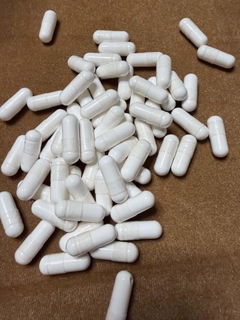
Start with Lion's Mane Powder and a capsule size that fits your target dose. Size 00 holds more powder per capsule than size 0 or size 1, so fewer capsules get you to the same daily amount.
The Filling Process Itself
Load the powder into the tray, spread it evenly, and press the two halves together to seal. Capsules stay in the tray after sealing. You remove them by hand, either pushed out one at a time or tipped onto a plate.
Getting The Dose Right And Storing What You Make
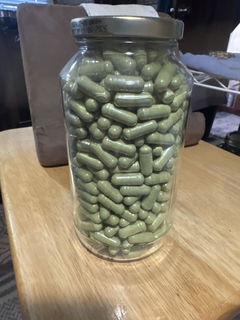
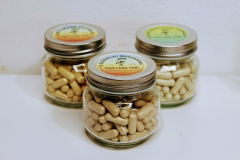
How much you tamp depends on your target milligrams per capsule, so a digital scale is the best way to confirm your actual dose. Expect about 10% weight variance between capsules, the same range found in store-bought supplements. Store finished lion's mane supplement capsules in a mason jar or zip-lock bag, not the machine's original box.
Buying Lion's Mane Capsules vs. Making Your Own
A store-bought bottle and a bag of powder can hold the same mushroom, but they rarely offer the same clarity. Once you know the difference between an extract and the whole thing, and once you understand what a scale actually confirms about your dose, the choice is less about brand loyalty and more about how much control you want over what ends up in the capsule. If you are not sure how to evaluate what you are buying either way, our guide on How to Judge the Quality of Your Supplement walks through what to check on any label.
We carry the powder, the capsules, and the filling machines needed to close that gap yourself, at a fraction of what a finished bottle typically costs. Some people prefer the convenience of a pre-made supplement, and that is a fair call too. What matters is that you are the one making it, with a clear picture of what you are taking and why.
Disclaimer: These statements have not been evaluated by the Food and Drug Administration. This product is not intended to diagnose, treat, cure, or prevent any disease.
Sources:
- Ma, B.-J., Shen, J.-W., Yu, H.-Y., Ruan, Y., Wu, T.-T., & Zhao, X. (2010). Hericenones and erinacines: Stimulators of nerve growth factor (NGF) biosynthesis in Hericium erinaceus. Mycology, 1(2), 92–98. https://doi.org/10.1080/21501201003735556
- Surendran, G., Saye, J., Binti Mohd Jalil, S., Spreadborough, J., Duong, K., Shatwan, I. M., Lilley, D., Heinrich, M., Dodd, G. F., & Surendran, S. (2025). Acute effects of a standardised extract of Hericium erinaceus (Lion's Mane mushroom) on cognition and mood in healthy younger adults: A double-blind randomised placebo-controlled study. Frontiers in Nutrition, 12, Article 1405796. https://doi.org/10.3389/fnut.2025.1405796
- Mori, K., Inatomi, S., Ouchi, K., Azumi, Y., & Tuchida, T. (2009). Improving effects of the mushroom Yamabushitake (Hericium erinaceus) on mild cognitive impairment: A double-blind placebo-controlled clinical trial. Phytotherapy Research, 23(3), 367–372. https://doi.org/10.1002/ptr.2634
- Mirończuk-Chodakowska, I., Kujawowicz, K., & Witkowska, A. M. (2021). Beta-glucans from fungi: Biological and health-promoting potential in the COVID-19 pandemic era. Nutrients, 13(11), 3960. https://doi.org/10.3390/nu13113960